

Introduction
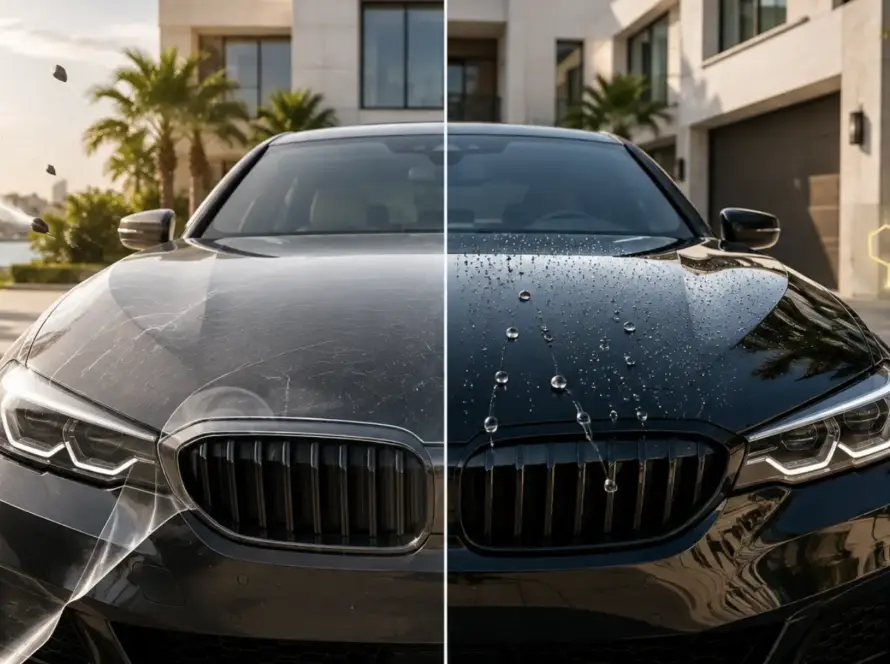
Driving a luxury vehicle in Dubai means facing environmental challenges like intense ultraviolet radiation, high humidity, and airborne particulates that threaten your paintwork. The primary enemy on UAE highways is desert sand, which acts like an invisible sandblaster at high speeds, causing sandblasting abrasion that dulls the factory clear coat and leaves a hazy surface.
Beyond microscopic abrasion, fine gravel and flying stone chips thrown up on roads like Sheikh Zayed Road cause deep impact damage. To combat this, car owners routinely choose between paint protection film and ceramic coating. Selecting the right solution requires understanding how each technology interacts with high-velocity desert sand.
Use our Smart Ceramic Coating PPF Near Me Guide as a quick-reference blueprint to navigate our comprehensive breakdown of automotive protection options. This layout helps you evaluate performance metrics across distinct pricing tiers under harsh desert conditions.
Table of Contents
- Understanding the Threat of Desert Sand
- The Science of Paint Protection Film
- The Mechanics of Ceramic Coating
- Direct Comparison against Sand Damage
- Which Investment Fits Your Luxury Vehicle
- Frequently Asked Questions
Understanding the Threat of Desert Sand
Driving a luxury vehicle in Dubai means facing a unique set of environmental challenges. While the smooth asphalt of Sheikh Zayed Road invites performance driving, the atmospheric conditions present a constant threat to your automotive paintwork. The combination of intense ultraviolet radiation, high humidity, and airborne particulates creates a harsh environment for any vehicle exterior.
The primary enemy of a flawless showroom finish on Dubai highways is desert sand. Airborne sand behaves like an invisible sandblaster at high speeds. When you drive through a minor dust storm or follow a larger vehicle on the highway, thousands of microscopic sand grains collide with your front bumper, bonnet, and side mirrors. Over time, this consistent friction results in sandblasting abrasion, which dulls the factory clear coat and leaves a hazy, micro-scratched surface.
Beyond microscopic abrasion, fine gravel and larger stone chips thrown up by tires cause deep impact damage. Once the factory paint layers are punctured, the aesthetic value of the vehicle drops, and the underlying panels are exposed to environmental degradation. To combat this, car owners routinely choose between paint protection film and ceramic coating. Choosing the correct solution requires an understanding of how each technology interacts with high-velocity desert sand.
The Science of Paint Protection Film
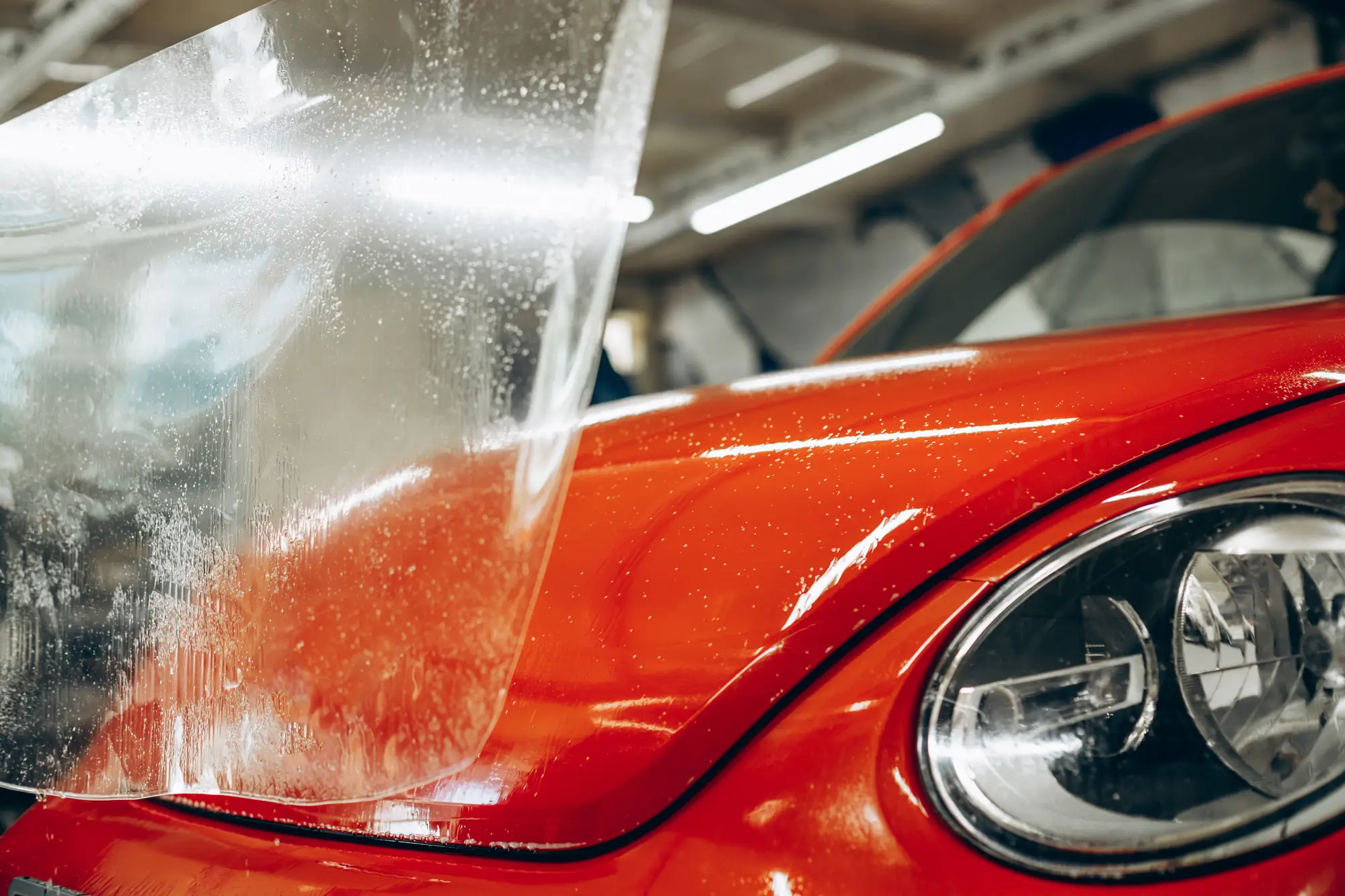
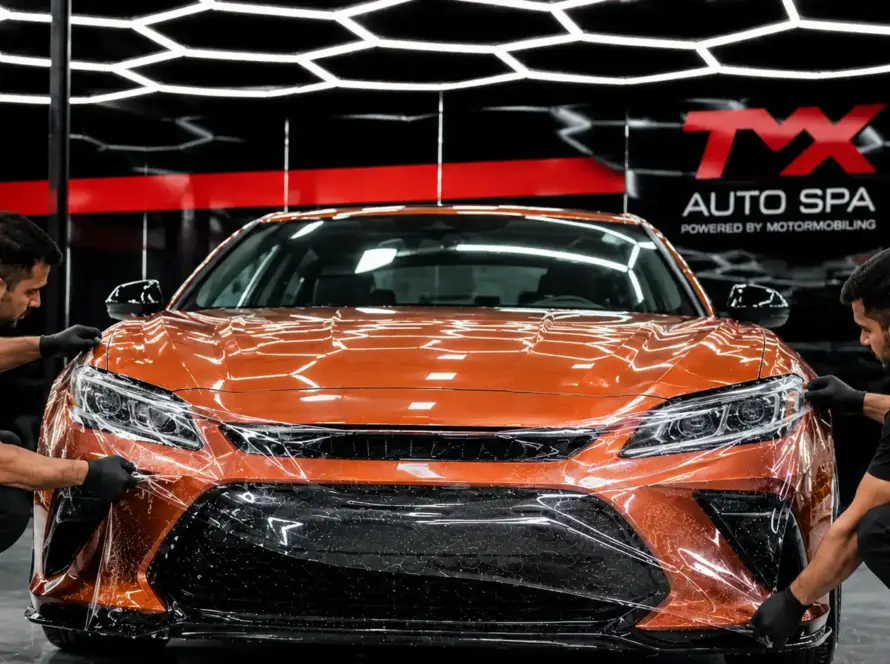
Paint protection film represents the ultimate tier of physical defense for luxury automobiles. Often referred to as clear bra, this material is a thick, multi-layered polyurethane membrane applied directly over the painted surfaces of a vehicle. High-quality variants utilize advanced thermoplastic polyurethane chemistry to deliver exceptional impact resistance.
The defining characteristic of premium films is the self-healing top layer. This layer consists of a specialized formulation that reacts to heat. When sand particles or small stones strike the surface, the polyurethane deflects the energy and flexes rather than tearing. If minor swirl marks or abrasions occur from dust or improper washing, the heat from the Dubai sun triggers the molecules to return to their original arrangement, effectively erasing the scratches.
The total thickness of this physical barrier typically ranges from six to eight mils. This physical mass acts as a shock absorber. When a stone or coarse sand grain impacts the vehicle front at one hundred kilometers per hour, the film disperses the impact energy across a wider surface area, preventing the force from reaching the delicate paint beneath.
The Mechanics of Ceramic Coating
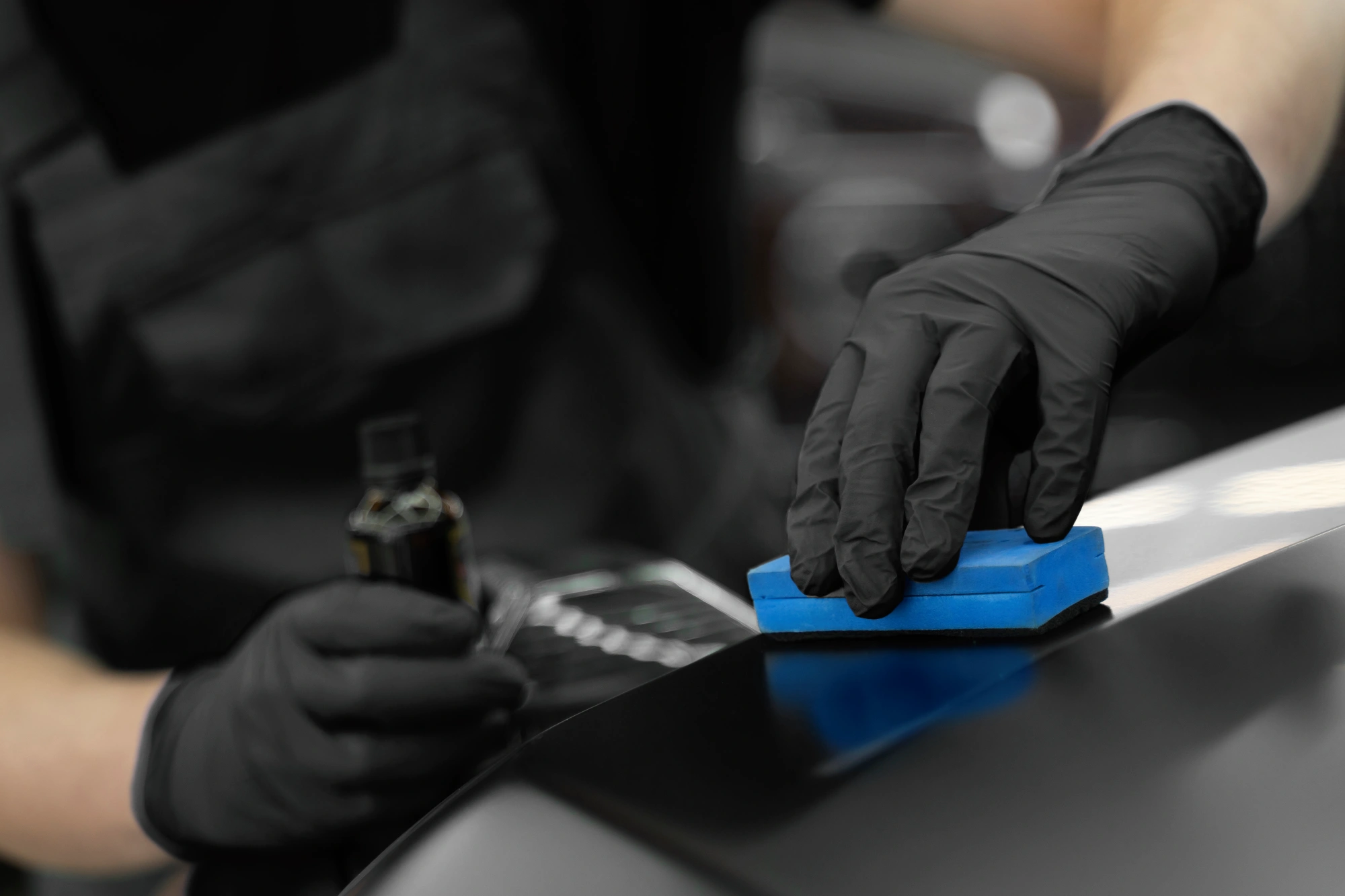
Ceramic coating takes a chemical approach to automotive preservation. Instead of applying a removable plastic barrier, a technician applies a liquid polymer containing silicon dioxide or titanium dioxide. This liquid chemically bonds with the factory clear coat on a molecular level, creating a semi-permanent, hydrophobic crystalline layer.
The core benefit of a high-quality ceramic formula is structural hardness. Measured on the pencil hardness scale, premium coatings reach a rating of 9H or higher. This creates a slick surface that significantly reduces the surface tension of the vehicle body. As a result, dust particles, bird droppings, and industrial fallout struggle to adhere to the vehicle, making the car much easier to clean during routine maintenance.
However, the thickness of a cured chemical coating is measured in microns rather than mils. One mil equals twenty-five microns. A standard ceramic application creates a layer that is generally less than two to three microns thick. While this thin, ultra-hard shell provides excellent protection against environmental oxidation, chemical stains, and microscopic wash swirls, it lacks the physical mass required to absorb heavy impacts.
Direct Comparison against Sand Damage
To understand how these options perform under real UAE highway conditions, we must analyze their resistance profiles side by side. The primary distinction lies in how each product reacts to physical force versus chemical or environmental exposure.
| Feature Comparison | Paint Protection Film | Ceramic Coating |
|---|---|---|
| Material Thickness | Six to eight mils | Two to three microns |
| Primary Benefit | Impact absorption | Hydrophobic gloss |
| Stone Chip Resistance | Complete prevention | Microscopic scratch reduction |
| Sandblasting Defense | Absorbs high-speed friction | Reduces dust adhesion |
| Self Healing Ability | Yes via solar heat | No |
| Longevity Profile | Five to ten years | Five to ten years |
When evaluating ppf vs ceramic coating dubai for highway driving, physical thickness dictates the winner against sandblasting abrasion. The thick polyurethane layout of the film acts as a sacrificial layer. Sand particles cannot pierce the elastic membrane, meaning the underlying paint remains completely untouched.
In contrast, a ceramic layer relies purely on surface slickness. While it helps fine dust slide off the body panels at low speeds, it cannot withstand the concentrated abrasive force of heavy sand particles hitting the bumper at highway velocities. The microscopic thickness means that sharp sand grains and stone chips will pass right through the ceramic shell, chipping the paint underneath.
Which Investment Fits Your Luxury Vehicle
Selecting the ideal protection package depends on your driving habits, budget constraints, and expectations. For car owners who frequently commute between emirates or drive high-performance supercars, maximum protection is non-negotiable. Reviewing a Proven Best PPF Near Me Selection Guide is highly recommended before choosing your package layout, ensuring you correctly map your specific driving habits against vehicle impact zones.
If your goal is absolute immunity from physical damage, installing a comprehensive clear film on the front impact zones or the entire body is the logical path. This keeps the factory paint in original condition, protecting the resale value of high-end vehicles.
For vehicles primarily used for short city commutes within low-speed urban areas, a premium chemical coating provides sufficient protection against environmental factors. It delivers a deep, glass-like shine that accentuates the body lines of luxury cars while shielding the paint from the intense UAE sun.
Many enthusiasts choose a hybrid installation approach. This method involves applying heavy-duty film to high-exposure areas like the front bumper, bonnet, wings, and wing mirrors, while coating the remaining panels with a premium ceramic formula to ensure consistent gloss, ease of cleaning, and comprehensive weather resistance across the entire vehicle profile.